Shared Horizons

The Napapijri Bulletin is a monthly editorial project that tells the extraordinary stories of extraordinary people. Cultural adventurers, friends of the brand, modern explorers: each month, The Bulletin celebrates those who dare to abandon the known maps to chart unexpected territories.

Shared Horizons

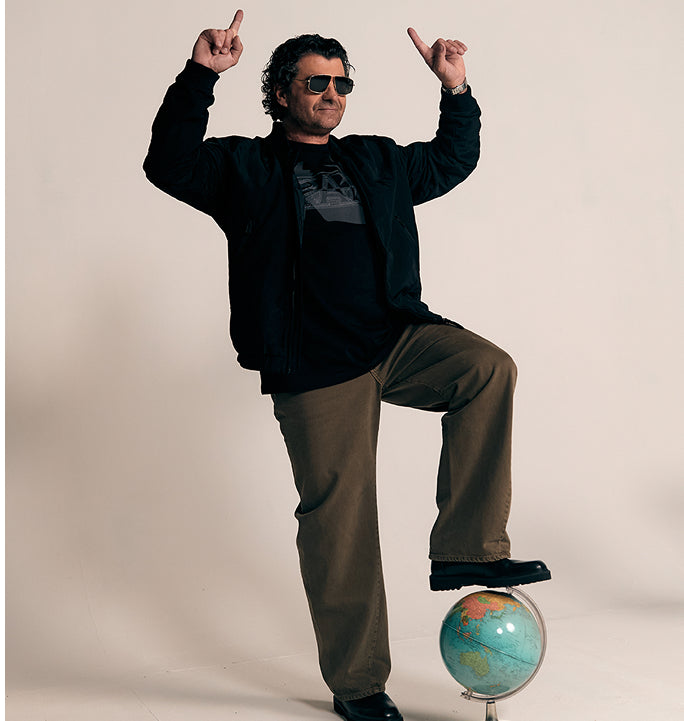
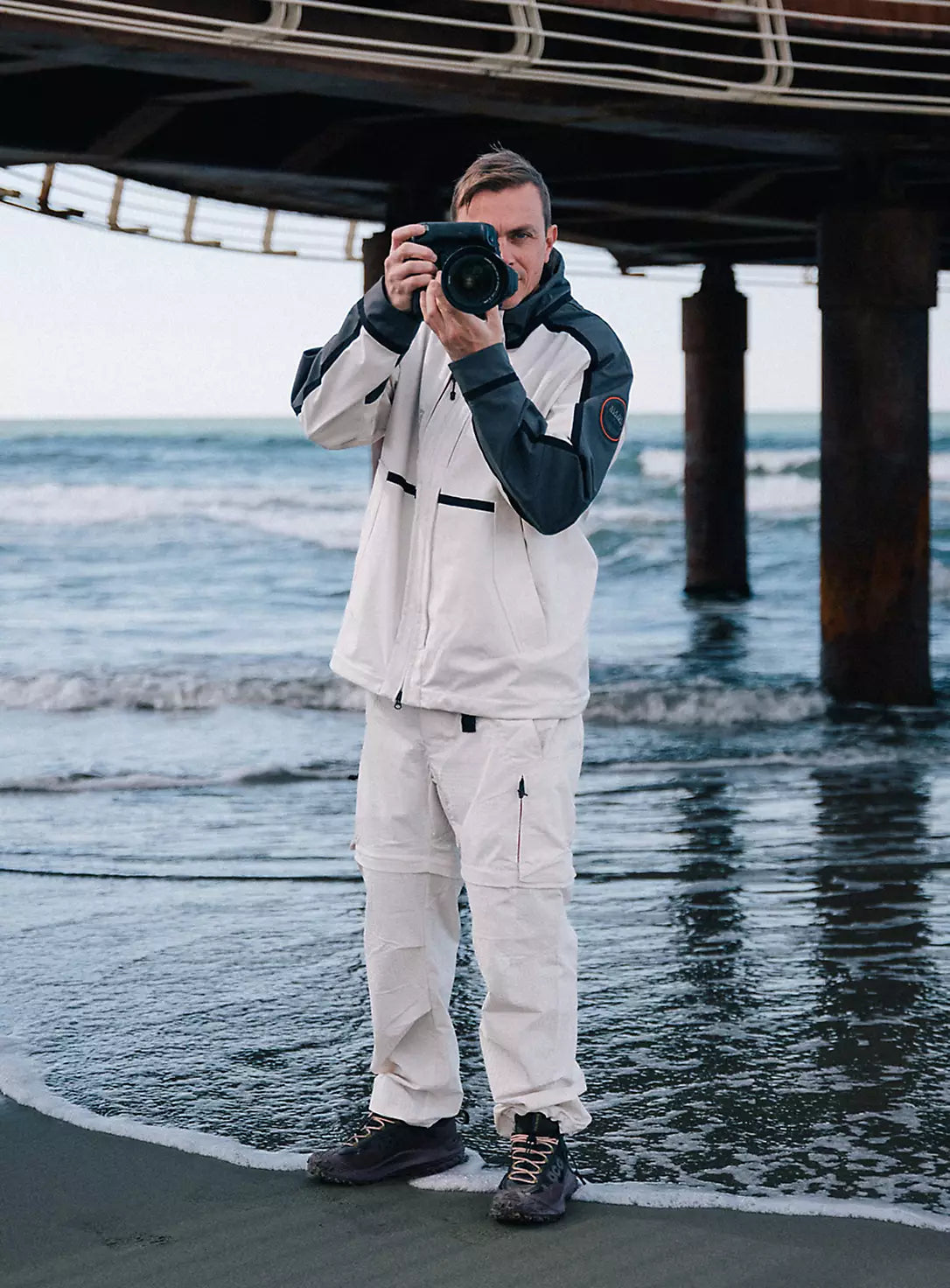
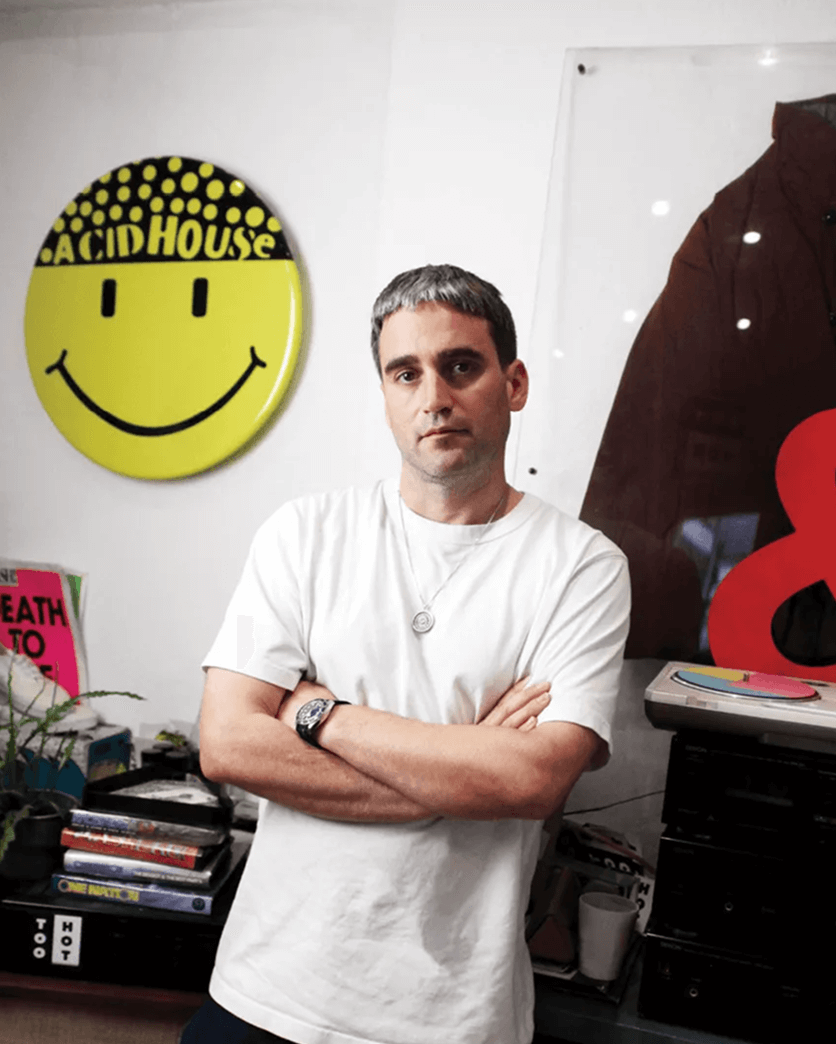
Across different trajectories and complementary perspectives, Stole “MOAB” Stojmenov and Bogdan “Chilldays” Plakov have been following the same creative path for years, building a shared visual language where graphic design and photography intersect and evolve.
On one side, MOAB translates sound into sharp, recognisable images. On the other, Chilldays brings a cinematic, intimate gaze, capturing moments and turning them into narratives.Together, they have charted new directions in contemporary visual culture, shaping projects for artists such as Lazza, Blanco and Marracash. Each work becomes more than a single image or cover — it unfolds into a layered, immersive territory to explore.
In this interview, they retrace the stages of this shared journey: from the origins of their common language to the way they build worlds from music, and the vision behind Spazio Fonte, the physical place where this exchange continues to take shape.

When was the first time you realised your visual worlds really worked together?

BG: Honestly, even before we met. Stole had reworked one of my shots for a cover, and from that moment on we started looking in the same direction.
SP: In our field, especially in the niche Bogi and I operate in, every designer needs a photographer, and vice versa. We actually met while working on the same project and immediately connected. So more than just realising our worlds worked well together, we built one together. It all started from that initial chemistry, learning from each other and evolving side by side, project after project.


Your collaboration feels more about building and exploring imaginary worlds than just graphic design or photography. Would you agree?

BG: I would. For both of us, it’s important to build a world, a story around everything we do. Over the years we’ve developed a very open way of collaborating. The goal is always the strongest final image, no matter who the idea comes from. It’s ours, together.
SP: Music, fashion and sport are unique spaces that allow us to push image making in many directions. We speak to an audience before a consumer. Every project is a story, and each story lives in its own world, whether real or metaphorical. That universe has to be built from the ground up, with its own rules and coherence. For me, it’s like a brand identity that expands across every dimension of reality.


When was the first time you realised your visual worlds really worked together?

BG: Honestly, even before we met. Stole had reworked one of my shots for a cover, and from that moment on we started looking in the same direction.
SP: In our field, especially in the niche Bogi and I operate in, every designer needs a photographer, and vice versa. We actually met while working on the same project and immediately connected. So more than just realising our worlds worked well together, we built one together. It all started from that initial chemistry, learning from each other and evolving side by side, project after project.


Your collaboration feels more about building and exploring imaginary worlds than just graphic design or photography. Would you agree?

BG: I would. For both of us, it’s important to build a world, a story around everything we do. Over the years we’ve developed a very open way of collaborating. The goal is always the strongest final image, no matter who the idea comes from. It’s ours, together.
SP: Music, fashion and sport are unique spaces that allow us to push image making in many directions. We speak to an audience before a consumer. Every project is a story, and each story lives in its own world, whether real or metaphorical. That universe has to be built from the ground up, with its own rules and coherence. For me, it’s like a brand identity that expands across every dimension of reality.

When you start working on a cover, do you begin from the music, visual references, or a feeling?

BG: With music, it’s crucial to understand what the artist wants to say. That’s where everything starts. Sometimes it comes from the first feeling after listening to demos, sometimes from our own research archive.
SP: It always starts from the music. There’s no right or wrong approach, it’s all about interpretation. Graphic design is essentially a translation process, and album artwork is the purest form of that, turning sound into image. I think Bogi and I connect so well because we share a similar cultural and emotional background, so our interpretations naturally align.

How did the idea for Spazio Fonte come about, and what did you want to emphasise compared to other creative spaces?

BG: Spazio Fonte came from the idea of sharing a space between me, Stole and Miller Bryant, and doing it in a way we felt was missing, being open in a city where doors are often closed. Whether we’ve succeeded or not isn’t for us to say.
SP: We all felt the need for a physical place where we could exist. First for our work, human interaction is essential, being able to work in a real space with collaborators. But also to create a meeting point where others could experience this kind of exchange, moving beyond purely digital dynamics.

In a world that looks to AI as a solution, places like Spazio Fonte remain rooted in cultural authenticity. Is it a form of resistance?

BG: More than resistance, it’s a way of living. I’ve always had mentors who believed in creating and sharing physical spaces. It’s an honour to carry that forward with Stole and Miller. We’re grateful to everyone who believes in what we’re doing.
SP: It’s more a necessity than resistance. There’s no claim of being revolutionary. Fonte is first of all our second home, and we’re happy it resonates with the people who inhabit it. Its strength lies in spontaneity, it’s how we balance the routines of everyday work.

In a world that looks to AI as a solution, places like Spazio Fonte remain rooted in cultural authenticity. Is it a form of resistance?

BG: More than resistance, it’s a way of living. I’ve always had mentors who believed in creating and sharing physical spaces. It’s an honour to carry that forward with Stole and Miller. We’re grateful to everyone who believes in what we’re doing.
SP: It’s more a necessity than resistance. There’s no claim of being revolutionary. Fonte is first of all our second home, and we’re happy it resonates with the people who inhabit it. Its strength lies in spontaneity, it’s how we balance the routines of everyday work.
Kleur: Zwart

199,00 €

Kleur: Wit

Osorno Jersey T-Shirt met Korte Mouwen

Martine Rose for Napapijri

90,00 €

Kleur: Lichtblauw

Blackburn Jeans

Martine Rose for Napapijri

150,00 €

Kleur: Wit Bruin

Lion Poloshirt met Lange Mouwen

Martine Rose for Napapijri

190,00 €

Kleur: Wit Whisper