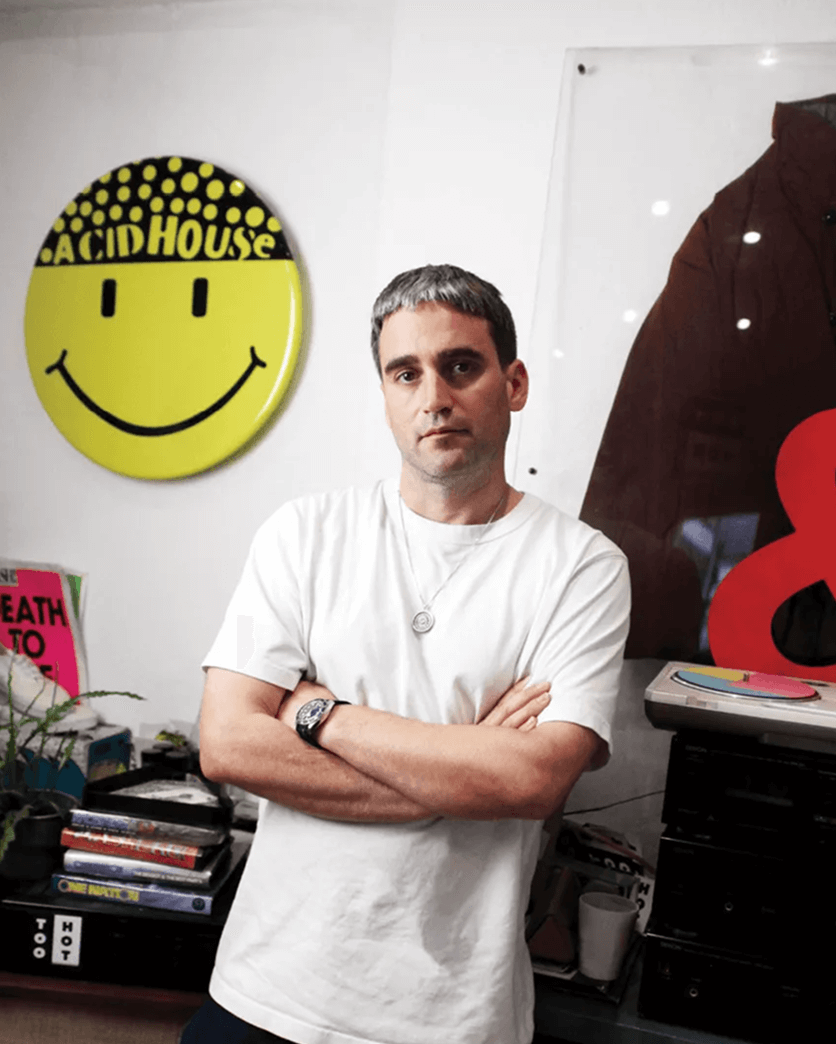
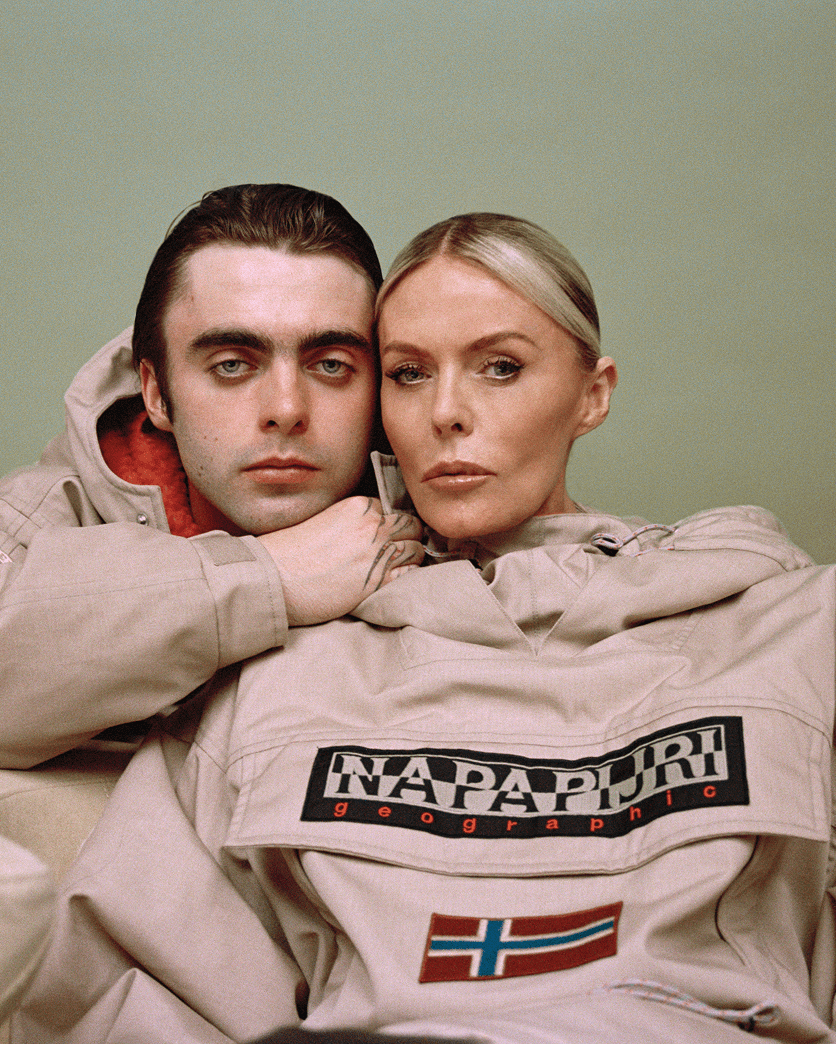
Greg Lynn: Beyond the Red Gate

The Napapijri Bulletin is a monthly editorial project that tells the extraordinary stories of extraordinary people. Cultural adventurers, friends of the brand, modern explorers: each month, The Bulletin celebrates those who dare to abandon the known maps to chart unexpected territories.

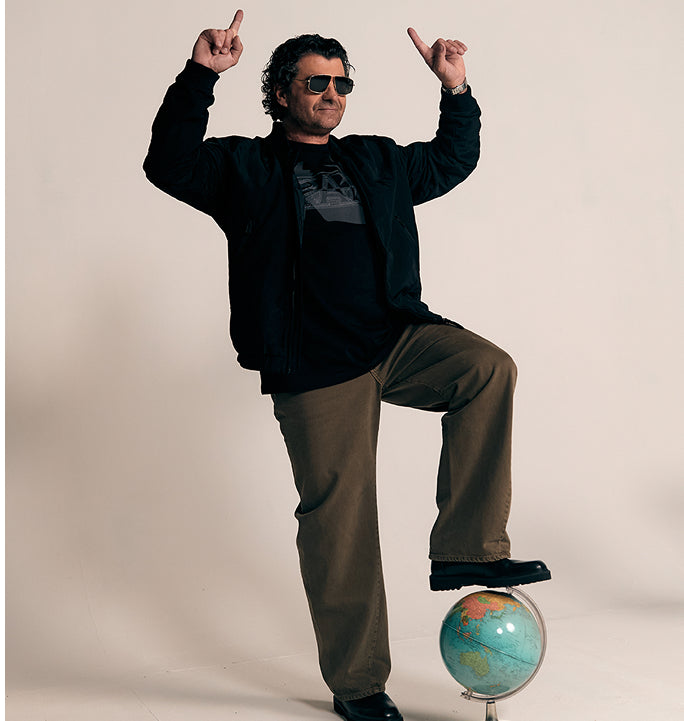
Architect, designer, technologist, and educator: Greg Lynn has spent a career charting his own course. From pioneering the use of emerging technologies in architecture to reimagining Moto Guzzi's historic home in Mandello del Lario, Lynn has consistently chosen to write his own maps rather than follow existing ones. In conversation with The Bulletin, he reflects on the value of crossing boundaries, the landscapes that inspire him, and why the most rewarding journeys often begin where established routes end.

Your work is defined by interisciplinarity. Tell us about the joy and freedom of moving across fields.

I enjoy meeting people who are smart and creative, no matter what their field is. Since I was very young, I tried to be generous with any skills or knowledge I had with people in other fields. While working in New York this connected me with painters, photographers, musicians, fashion designers, and writers. I became acquaintances with many lifelong friends with several. The same in Los Angeles where I got to know people involved in aerospace, technology, and film industries. I enjoy diving deep into different fields and I find there is usually mutual interest in someone with design skills. My hopping between fields has more to do with being drawn to people who innovate than it is an interest in any of those fields.


Some people travel through places; others travel through ideas. Which kind of traveler are you?

I travel to places. I have been lucky to have had a few ideas when I was very young, and for me, they were durable enough that I haven’t found the need to travel to many new ideas. I have travelled to many more places than I have ever had ideas.


Throughout your career, you've embraced emerging technologies long before they became mainstream. What attracts you to the unknown?

I have always embraced this as my job. I wouldn’t describe it as voyage into the unknown as I have never discovered new things. To me, emerging technology adoption is more of a task. It is a way I can be useful. I have always worked to find practical applications of new technology and I work hard to make the applications easily understood and copied by as many people as possible. I do not feel I have been successful most of the time, but I do feel the satisfaction of being useful when this works.


Your work is defined by interisciplinarity. Tell us about the joy and freedom of moving across fields.

I enjoy meeting people who are smart and creative, no matter what their field is. Since I was very young, I tried to be generous with any skills or knowledge I had with people in other fields. While working in New York this connected me with painters, photographers, musicians, fashion designers, and writers. I became acquaintances with many lifelong friends with several. The same in Los Angeles where I got to know people involved in aerospace, technology, and film industries. I enjoy diving deep into different fields and I find there is usually mutual interest in someone with design skills. My hopping between fields has more to do with being drawn to people who innovate than it is an interest in any of those fields.


Some people travel through places; others travel through ideas. Which kind of traveler are you?

I travel to places. I have been lucky to have had a few ideas when I was very young, and for me, they were durable enough that I haven’t found the need to travel to many new ideas. I have travelled to many more places than I have ever had ideas.


Throughout your career, you've embraced emerging technologies long before they became mainstream. What attracts you to the unknown?

I have always embraced this as my job. I wouldn’t describe it as voyage into the unknown as I have never discovered new things. To me, emerging technology adoption is more of a task. It is a way I can be useful. I have always worked to find practical applications of new technology and I work hard to make the applications easily understood and copied by as many people as possible. I do not feel I have been successful most of the time, but I do feel the satisfaction of being useful when this works.

What are you still curious about?

I am serially curious which is a bit of a problem. One constant, that I am more deeply curious about than ever, is music and sound. I try to limit the time I spend on screens. Between computer, phone, and television screens I need something more seductive to pull me off devices and right now for me that is actively listening to music. I can be endlessly curious about jazz organ trios or flatpicking bluegrass and then a band like Angine de Poitrine comes along and I have something new to anticipate and follow as well.


The Moto Guzzi site sits at the intersection of history and innovation. What was your starting point when reimagining such an iconic place?

It started with the idea that I might design a new Engine Factory building and a site visit. Every single idea was put into place during the six hours that I first visited Mandello with Roberto and Michele Colaninno. First, driving along the lake, seeing the Canotierri Moto Guzzi, the red gate, and entering the campus with the nearly 100 year-old buildings. Having discovered the historical legacy in the Museum, witnessed new bikes being built in the factory, imagined owning one of the new models and riding it along the lake and into the mountain passes; I knew there was an alternative to building a new factory building. Together we discussed inviting people into a generous plaza lined with buildings for visitors with an active factory wrapping around them. It took ten years to execute on these ideas, but the vision for a unique place with futuristic manufacturing and historic legacy all accessible to the public was in place on the first day.

What fascinated you most about the Mandello del Lario site, between the lake, the mountains and the factory itself?

These three landscapes are what makes this place so special: lake plus mountains plus factory. They are fascinating in their combination as it is so unusual in the world to have all three together surrounding you. What was critical to having this experience of all three at once are the two plazas where you can get views of all three layer by layer.


Motorcycles are objects of engineering, but also of emotion. How did you bring those two dimensions together in the overall site experience?

This is the easiest project to design for exactly this reason. It is tough for me to see a single motorcycle let alone 100 years of motorcycles and not imagine adventure. Engineering is happening on one side as people investigate the factories and the emotion is happening as they investigate the civic spaces beside their family and friends. I hope that we have created an alluring place that invites exploration in and around the buildings and I hope we are providing new and previously impossible views of the bikes from many different vantage points. The buildings are merely frames and pedestals for the heroes, which are the bikes.


If you could guide visitors to one detail, moment or space within the site that they should not miss, what would it be?

That moment is the same as it ever was, il cancello rosso.

What fascinated you most about the Mandello del Lario site, between the lake, the mountains and the factory itself?

These three landscapes are what makes this place so special: lake plus mountains plus factory. They are fascinating in their combination as it is so unusual in the world to have all three together surrounding you. What was critical to having this experience of all three at once are the two plazas where you can get views of all three layer by layer.


Motorcycles are objects of engineering, but also of emotion. How did you bring those two dimensions together in the overall site experience?

This is the easiest project to design for exactly this reason. It is tough for me to see a single motorcycle let alone 100 years of motorcycles and not imagine adventure. Engineering is happening on one side as people investigate the factories and the emotion is happening as they investigate the civic spaces beside their family and friends. I hope that we have created an alluring place that invites exploration in and around the buildings and I hope we are providing new and previously impossible views of the bikes from many different vantage points. The buildings are merely frames and pedestals for the heroes, which are the bikes.


If you could guide visitors to one detail, moment or space within the site that they should not miss, what would it be?

That moment is the same as it ever was, il cancello rosso.

Color: White
Color: Dark Blue
Color: Beige Petrified Oak
Color: Blue Academy
Color: Beige Petrified Oak